

About Recipes Restaurants FAQ My Kitchen My Kitchen
Showing posts with label Thomas Keller. Show all posts

Thursday, February 24, 2011

Leek Bread Pudding

DSC_0014

Every day, on my way to work, I pass by a Church in Scotch Plains that has a sign on the corner of their property. They post witty little messages on the sign… things like “Give Satan an inch and he’ll become a ruler.” For 4 years, I’ve been chuckling at whatever play on words they’ve posted that week. But at the end of a long snowy winter, their newest thought pretty much sums up the feelings of just about everyone I know: “Whoever’s praying for snow, please stop!”

I usually like winter, but I’m over it this year. Last Friday it was 65 degrees out, before the temperatures dropped again. It was a cruel tease. I saw tiny little spikes of my hyacinths poking through the soil and then it snowed again. The silver lining is that I can still crank up the oven and make lots of yummy comfort food. So that’s what you’ll be seeing here over the next week or so. Things like this lush leek bread pudding and blueberry butter cake and crispy chicken thighs…

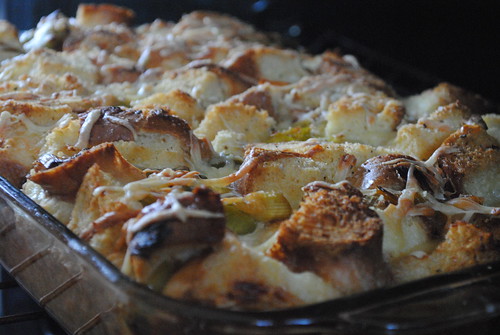
But back to the leek bread pudding. It’s from Thomas Keller’s Ad Hoc at Home, a book which continues to be one of my top 5 favorite cookbooks. It's pretty simple to put together and tastes as good if not better leftover. We had it with grilled steaks, but it'd go well with ham, lamb or even pork. My adaptation is below - the original called for whole milk. I didn't miss the extra fat...
DSC_0146

Leek Bread Pudding
adapted from Ad Hoc at Home by Thomas Keller

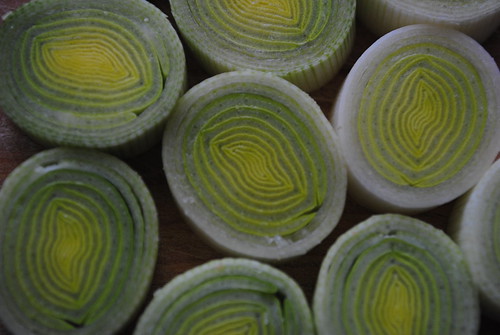
2 cups 1/2-inch-thick slices leeks (white and light green parts only)
Kosher salt
4 tablespoons (2 ounces) unsalted butter
Freshly ground black pepper
12 cups 1-inch cubes crustless Brioche or Pullman sandwich loaf
1 tablespoon finely chopped chives
1 teaspoon thyme leaves
3 large eggs
3 cups reduced fat milk
3 cups heavy cream
Freshly grated nutmeg
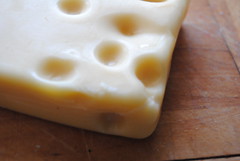
1 cup shredded Comté or Emmentaler
DSC_0134 DSC_0158
DSC_0173 DSC_0178

Preheat the oven to 350°F.

Put the leek rounds in a large bowl of tepid water and swish so that any dirt falls to the bottom of the bowl. Set a medium sauté pan over medium-high heat, lift the leeks from the water, drain, and add them to the pan. Season with salt and cook, stirring often, for about 5 minutes. As the leeks begin to soften, lower the heat to medium-low. The leeks will release liquid. Stir in the butter to emulsify, and season with pepper to taste. Cover the pan with a parchment lid, and cook, stirring every 10 minutes, until the leeks are very soft, 30 to 35 minutes. If at any point the butter breaks or looks oily, stir in about a tablespoon of water to re-emulsify the sauce. Remove and discard the parchment lid.

Meanwhile, spread the bread cubes on a baking sheet and toast in the oven for about 20 minutes, rotating the pan about halfway through, until dry and pale gold. Transfer to a large bowl. Leave the oven on.
Add the leeks to the bread and toss well, then add the chives and thyme.

Lightly whisk the eggs in another large bowl. Whisk in the milk, cream, a generous pinch of salt, pepper to taste, and a pinch of nutmeg.

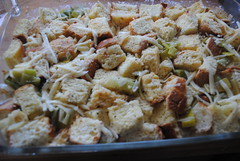
Sprinkle 1/4 cup of the cheese in the bottom of a 9-by-13-inch baking pan. Spread half the leeks and croutons in the pan and sprinkle with another 1/4 cup cheese. Scatter the remaining leeks and croutons over and top with another 1/4 cup cheese. Pour in enough of the custard mixture to cover the bread and press gently on the bread so it soaks in the milk. Let soak for about 15 minutes.

Add the remaining custard, allowing some of the soaked cubes of bread to protrude. Sprinkle the remaining 1/4 cup cheese on top and sprinkle with salt.

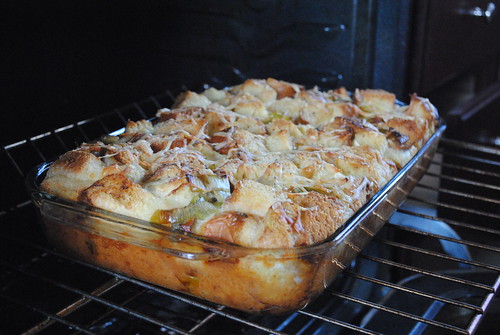
Bake for 1 1/2 hours, or until the pudding feels set and the top is brown and bubbling.
DSC_0003

Thursday, April 1, 2010

Surf and Turf, French Laundry style

oxtails-monkfish

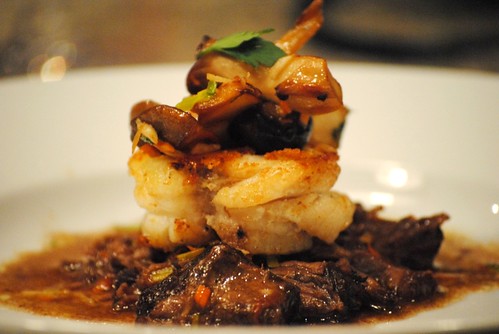
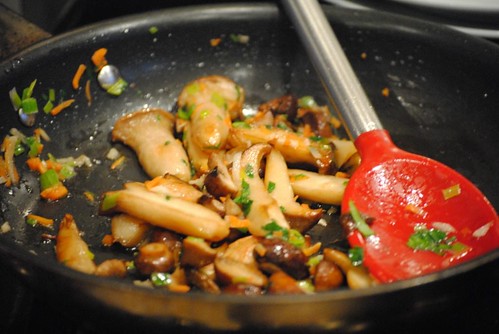
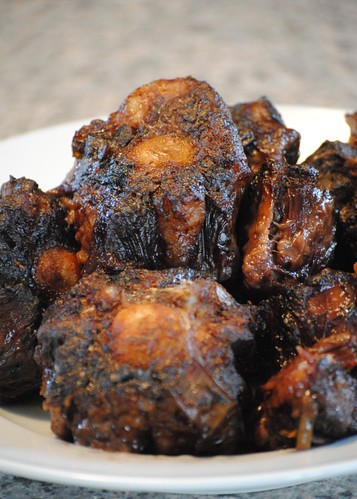
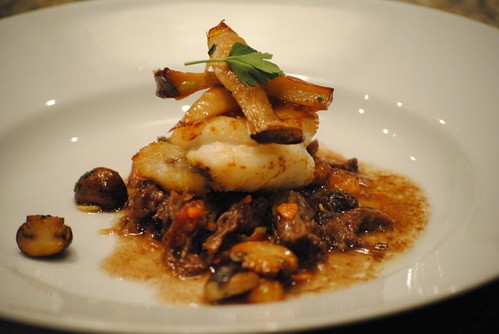
In a burst of energy (or perhaps a moment of weakness), I decided to have a go at another French Laundry recipe on Saturday night. I selected "Surf and Turf", braised oxtails with seared monkfish, topped with sauteed salsify and cepes. Pretty ambitious considering I was unsure of finding any of the main ingredients...

oxtails-monkfish (1)

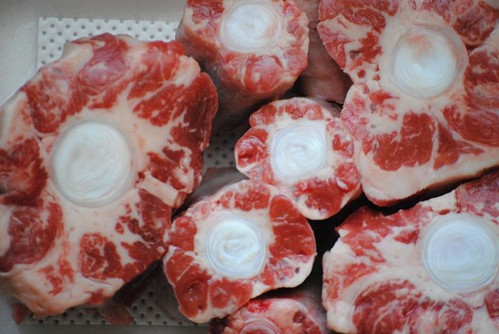
Thus began the shopping trip. I started at my local farm market... no cepes or salsify there, but I got the makings for the brunoise and the braising liquid. Next morning, off I went again. At my first stop I found oxtails - ok I now had 1 of 4 main ingredients. I grabbed a package of crimini mushrooms just in case I couldn't find cepes. Then I moved onto the next store...

oxtails-monkfish (4)

As I neared the seafood counter, a glistening piece of monkfish caught my eye. But it was just one lonely piece - I had a bad feeling... I asked the fishmonger if it was fresh and he very honestly shook his head no... Well, that fish was not for me, thank you very much. I rounded the corner to produce and was greeted by a beautiful sight: a whole line of D'Artagnan gourmet mushrooms... But, no cepes. I grabbed come royal trumpets which worked out beautifully. No salsify there either. At that point I decided I could live without salsify, but I could not make surf and turf without the surf...

oxtails-monkfish (3)

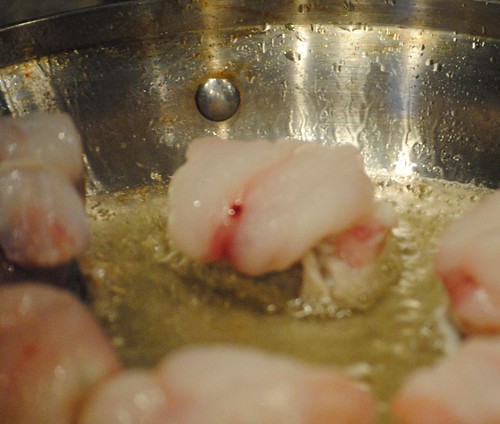
I pulled into a little seafood market in Westfield, NJ, and walked in. I scanned the counter and saw two beautiful pieces of what looked like monkfish tail, but the sign said... catfish??? So I asked and I was right, monkfish! I carried my trreasure home and got started...

oxtails-monkfish (5)

In lieu of typing the entire recipe, I'm going to save myself from a case of carpal tunnel and instead share a link directly to it. Needless to say, I left out the salsify and we didn't miss it. The oxtails had a rich full flavor - similar to that of braised shortribs. The fish was mild, and perhaps a bit overpowered by the rich beef. The Royal Trumpet mushrooms were meaty and delicious atop the whole thing. I served it with a simple salad of mache, jicama and sliced avocado with a dijon vinaigrette. A dish I would definitely make again - perhaps after I try a few more of Keller's concoctions... So check back to see when I get the French Laundry out again!

oxtails-monkfish (6)

Friday, March 26, 2010

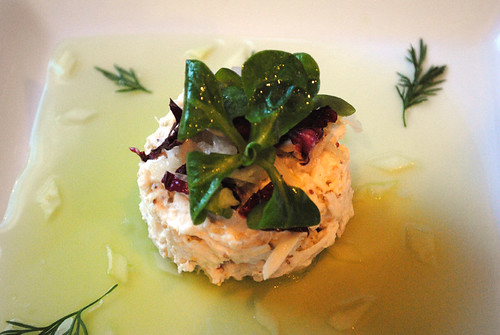
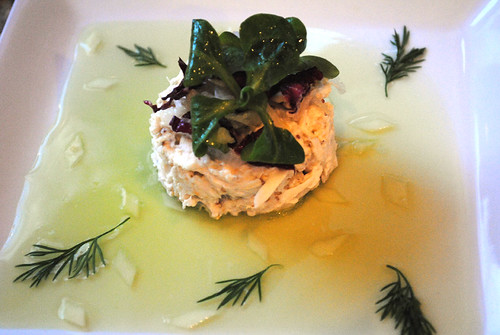
French Laundry Crab: Crab Salad with Cucumber Jelly, Grainy Mustard Vinaigrette and Mache

keller-crab-salad2

My dream is to one day dine at the French Laundry in Napa Valley. Until that day comes, I'll happily try my hand at Thomas Keller's recipes and content myself with imagining what it will be like when I do go. That said, I've had the French Laundry cookbook for awhile now and I've only made two recipes. Many of them are pretty involved and I just don't get myself organized enough to get through them. But last Saturday, my parents came over for dinner.

I was making a pretty simple meal: grilled ribeyes and homemade pasta with prosciutto, grilled asparagus, smoked mozzarella and fresh basil. I wanted a first course that was a little more interesting. So I climbed onto my stool and got the French Laundry down from its place of honor in my kitchen. I quickly settled on Dungeness Crab Salad with Cucumber Jelly, Grainy Mustard Vinaigrette and Frisee Lettuce. It was beautiful, light, and only a couple ingredients would give me a challenge.

I ended up making some modifications. Keller says to buy cucumber juice at a health food store (I couldn't find it) or to make it at home in a juicer (I don't have one). So I made my own using my method noted below. I also used jicama in place of daikon and mache in place of frisee. To see what other modificaitons I made, you're just going to have to get a copy of the French Laundry!

It proved to be a hit with Jeff and my parents and it's a first course I'll make again. It's not too complicated and it really does plate beautifully. Give it a shot. We had the leftover crab the next day without any cucumber jelly and it's still delish. So if the jelly scares you, make the rest of the dish without it.

cucumber-jelly (1)

Crab salad with Cucumber Jelly, Grainy Mustard Vinaigrette and Mache
adapted from The French Laundry by Thomas Keller

For the cucumber jelly:
1 1/2 peeled cucumbers, cut into chunks, plus 1/2 small cucumber peeled
1/2 tsp. plain gelatin
1 Tbsp. warm water
24 dill sprigs, plus more to garnish salad

For the crab salad:
1/3 cup heavy cream
3-4 tsp. whole grain Dijon mustard
Kosher salt and white pepper
1 lb. lump crab meat
1 c. baby greens (I used Mache rosettes)
2-3 radicchio leaves torn into small pieces
3 Tbsp. grated jicama
Extra virgin olive oil
1-2 tsp. lemon juice
Kosher salt and white pepper

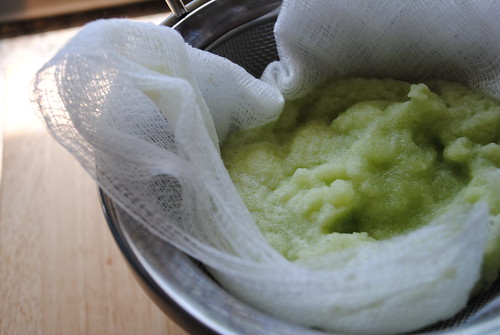
Place the chunks of cucumber in a blender and puree. (Add a little water if needed to get it started.). Line a mesh strainer with a few layers of cheesecloth and place over a bowl. Pour the cucumber puree into the strainer and let sit. You need 1 cup of cucumber juice (I got plenty from 1 1/2 medium cucumbers). Set the juice aside.

cucumber-jelly

Using a mandoline or sharp knife, cut lengthwise slices about 1/8 inch thick from the half cucumber. Cut the slices into narrow strips about 1/8 inch wide and then cut the strips at an angle to make diamonds. You will need about 2 tablespoons of diamonds. Set aside.

Mix the gelatin with the warm water and stir to dissolve. When the gelatine has dissolved, whisk it into 1 cup of cucumber juice. Pour a thin layer of the juice onto each of 4 serving plates. Discard any excess (I used square plates and used just about all of the juice).

Arrange 6 dill sprigs around each plate and some of the cucumber diamonds. Leave the center open as this is where the crab will go. Put the plates in the refrigerator to set for at least one hour. (My refrigerator shelves were a bit uneven, so I used folded index cards to make sure the juice didn't collect on one side of the plate!)

Before serving, whip the cream in a medium bowl until it forms a ribbon when the whisk is lifted. Whisk in the mustard and salt and pepper to taste. Place the crab in a separate bowl and fold in just enough of the cream mixture to bind the salad. (Don't just dump the crab into the cream because you may have too much whipped cream.)

Toss the greens, radicchio and jicama with a little olive oil and the lemon juice and season to taste with salt and pepper.

Fill a 2 to 2 1/2 inch ring mold or cookie cutter with the crab mixture (pack it in so the shape holds) and carefully place over the center of the plate. Lift the mold off and then top the crab with a bit of the greens and a few extra dill sprigs.

Note: don't take the plates out fo the fridge too soon or the gelatin will soften. If that happens, stick them back in the fridge for a few minutes to harden.

Makes about 4 servings.

keller-crab-salad3

Monday, February 15, 2010

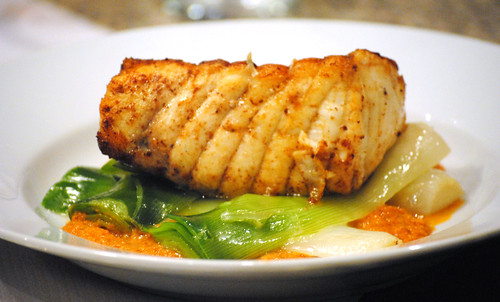
An Ad Hoc Valentine's Day: Roasted Monkfish over Leeks and Romesco Sauce

My love affair with Ad Hoc at Home continued this weekend as I prepared Thomas Keller's Roasted monkfish with baby leeks and Romesco Sauce. Romesco is a Spanish sauce made with tomato, red pepper, bread, and a few other ingredients. It's a sauce I've made many times before, typically served on grilled scallions. Keller's recipe was slightly different so I tried his for a change. It was delicious - a bit sweeter than my other recipe.

roasted-monkfish-leeks-romesco (4)

I couldn't find baby leeks, so I got some regular leeks, trimmed the roots leaving the bottoms intact so the leeks didn't fall apart and then follow the recipe in Ad Hoc for Baby leeks. The fish I did exactly as he said, but cooked mine a bit longer - the pieces of fish were quite thick as you can see from the picture. Flown in fresh that morning, this was the best monkfish we've ever had. I thank both my fish guy who special ordered it for me as well as Chef Keller!

Pair this fish with other sides or sauces if you prefer. It's a great preparation that would go nicely with any number of combinations. Bottom line, follow Keller's method and you simply can't go wrong! I cut the recipes in half and made a few modifications, so my version are below. The fish is exactly Keller's but with half the ingredients. The others I modified a bit...

Roasted monkfish
adapted from Ad Hoc at Home by Thomas Keller

2 8-ounce monkfish tail fillets
Canola oil (to coat the pan)
Kosher salt
2 Tbsp. unsalted butter
2 garlic cloves, smashed, skin left on
3 medium rosemary sprigs
Romesco sauce, warmed (see below)
Baby leeks (see below)

Remove the fish from the refrigerator and let sit at room temperature for 30 minutes.

Heat some canola oil in a large frying pan over medium-high heat until it just smokes. Season the fish with salt then place it in the pan, presentation side down (the rounded side). Cook until the first side is pale golden. Add 1 tablespoon of the butter to the pan and let it melt. Add the second tablespoon and let that melt (adding them at the same time could lower the temperature in the pan). Once the butter has browned, tilt the pan and baste the fish as you continue to cook it until it is a rich golden brown on the first side, 1-2 more minutes.

Turn the fish over and cook, basting continuously with the butter, until it is a rich golden brown on the second side, 4-5 minutes. Add the garlic and rosemary to the pan, and continue to baste the fish as the aromatics flavor the butter. Cook until the temperature in the center of the fish is 145F. (Keller says 1-2 minutes, mine took about 5).

Spread the Romesco on a plate. Top with a few leeks. Then place the fish on top. If you want, finish with some good extra virgin olive oil and Maldon Sea Salt.

Baby Leeks

12 baby leeks, or 4 regular leeks, trimmed and halved lengthwise so they don't fall apart
3 Tbsp. chicken stock
3 Tbsp. unsalted butter

Bring a large pot of salted water to a boil. Prepare an ice water bath. Set out a cooling rack and line with paper towels.

Trim the dark green parts from the leeks and rinse well under warm water. Blanch the leeks for about 6 minutes until just tender. Immediately transfer to the ice water bath to cool, then place on the rack to drain.

Remove the outer layer from each leek. Bring the stuck to a simmer in a medium saute pan. Whisk in the butter one piece at a time to make an emulsification. Add the leeks and season to taste with salt and pepper.

Romesco Sauce

1 dried sweet chile (I used New Mexico, but Nora or Pasilla would also work)
3 plum tomatoes, cored and halved lengthwise
1/2 red bell pepper, cored and seeded
1/2 onion
1 garlic clove
1/8 cup extra virgin olive oil
Kosher salt and freshly ground black pepper
Canola oil
3 crustless 2-in cubes country bread
1/8 cup slivered almonds
1 Tbsp. sherry vinager
1/2 tsp. sweet paprika
3/4 tsp. piment d'espelette (I used a pinch of cayenne and a pinch of smoked paprika instead)

Preheat over to 400F.

Remove the seed and stem from the chile. Put it in a small bowl, cover with warm water and soak for 30 minutes.

Put the tomatoes, bell pepper, onion and garlic ina roasting pan and toss with the olive oil, salt and pepper. Turn the tomatoes and pepper cut side down. Roast for one hour, until the vegetables are well-browned with some charring. Remove from the oven and let cool slightly.

Remove the skins from the tomatoes and pepper. Discard the outer layer of the onion. Reserve any liquid in the pan.

Heat some canola oil in a small frying pan over medium heat. Add the bread and toast until browned on all sides. Remove from the pan. Add the nuts and toast until fragrant, about 30 seconds to 1 minute. Transfer to a plate.

Drain the chile. Put it in a blender with the tomatoes, pepper, onion, garlic, and reserved liquid. Blend until smooth. Add remaining ingredients and blend until smooth. Season to taste with salt and pepper.

Makes about 1 cup. Refrigerate covered for up to 2 weeks.

Monday, February 8, 2010

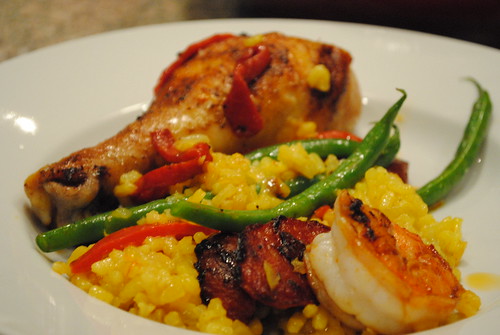
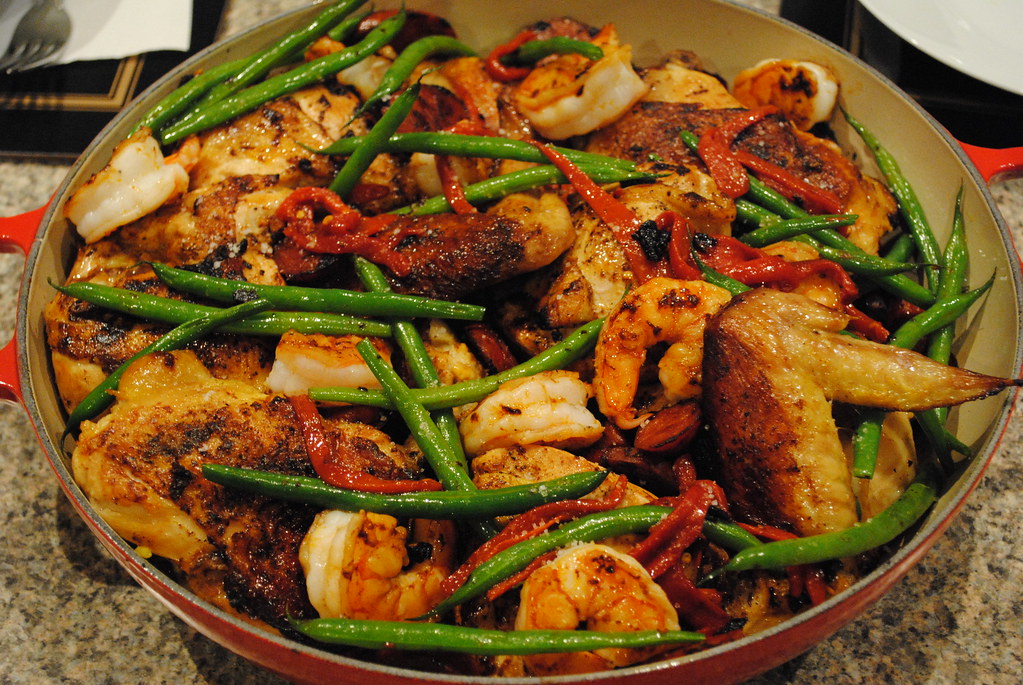
Another winner from Chef Keller: Chicken Mar Y Muntanya

I think I'm in love... with a cookbook.

It's rare that my husband raves about a chicken dish. We like chicken, but it seldom gets the comment, "This is one of the best dinners you've ever made." Saturday night, I once again turned to Chef Keller's ad Hoc at Home and my husband sang the chef's praises throughout the meal. He's even looking forward to leftovers tonight!

thomas-keller-chicken-paella (2)

Full of big Spanish flavors, this is a great winter meal - it'd be a sure winner for a dinner party. I stuck pretty close to Keller's recipe. I couldn't get Piment d'Espelette in time, so I used a little cayenne and a little smoked paprika. I also left out the mussels since my husband is allergic to them. I did have piquillo peppers (go figure!), but a roasted red pepper would make a fine substitution. You could also add lobster, clams or veggies other than green beans and it would taste great.

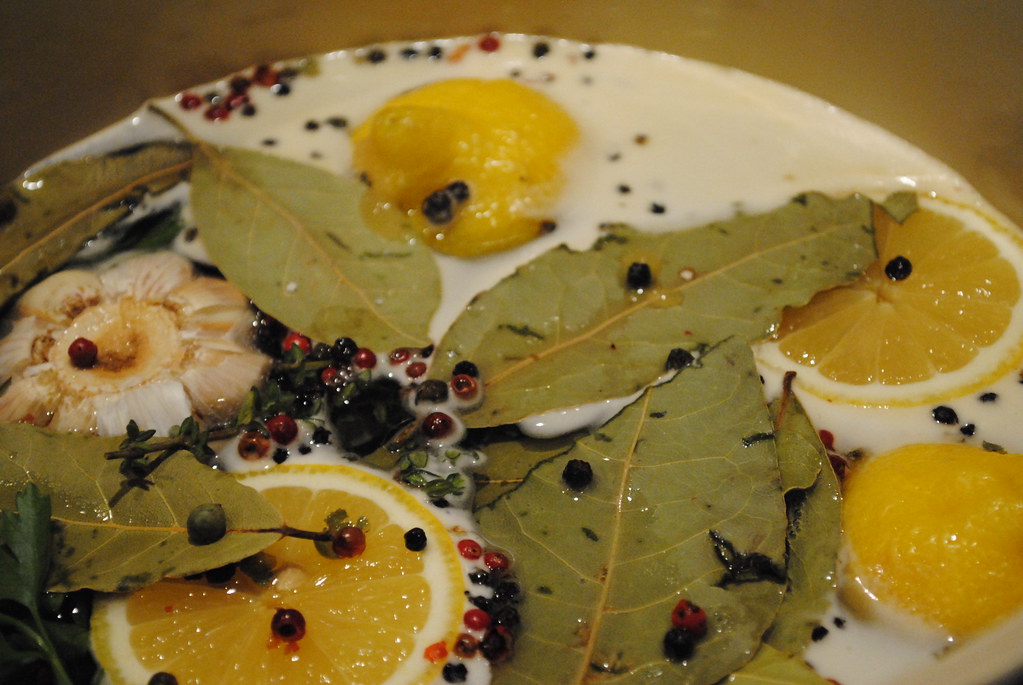
My one caution (which I rarely heed myself) is read the recipe all the way through before you start. Brining the chicken gives it amazing flavor and keeps it deliciously moist, but you need to do some advance work to make the brine, cool it and then soak the chicken for 12 hours. I halved the rice recipe, but with all the leftover chicken, I may need to make some more. Also, my chicken took longer to cook - it was a little bigger than 4 pounds, so just be sure you cook it thru!

Note well: For some of teh Spanish ingredients, look on La Tienda. Piment d'Espelette can be found on amazon. And my all-time favorite chorizo is d'Artagnan.

thomas-keller-chicken-paella (13)

Chicken Mar i Muntanya
with shrimp, mussels, green beans, piquillo peppers, and chorizo
From Ad Hoc at Home, by Thomas Keller
  • One 4-pound chicken
  • 1/2 recipe Chicken brine (see below), cold
  • 12 extra-large shrimp (12-15 count), shells on
  • Kosher salt and freshly ground pepper
  • Piment d'Espelette
  • Canola oil
  • Saffron rice (see below), warm
  • 4 piquillo peppers, cut lengthwise into 1/4-inch-wide strips
  • 1 cup thin green beans (haricots verts), blanched
  • 1/2 cup chicken stock, warm
  • 1 Spanish chorizo sausage (about 4 ounces), cut into 1/4-inch-thick slices
  • 1/4 cup dry white wine, such as Sauvignon Blanc
  • 18 small mussels, preferably Bouchot or PEI (I didn't add these, but feel free!)
  • Flat-leaf parsley leaves
  • Fleur de Sel 
Cut the chicken into 10 pieces. Pour the brine into a container large enough to hold the chicken, add the chicken, and refrigerate for about 12 hours (no longer, or the chicken may become too salty).

Preheat the oven to 400F.

Remove the chicken from the brine and rinse under cold water, removing any herbs or spices sticking to the skin. Pat dry with paper towels, or let air dry. Set aside.

Without removing the shells, using a small pair of scissors or a paring knife, make a shallow cut down the back of each shrimp from head to tail. Gently open up the shrimp and, with your fingers or the paring knife, remove the vein. Rinse the shrimp under cold water.

Combine 4 cups water and 1/2 cup plus 2 tablespoons salt in a medium bowl and stir to dissolve the salt. Add the shrimp to the brine and let stand at room temperature for 10 minutes. Remove from the brine, rinse, and drain on paper towels.

Season the chicken with salt, pepper, and a sprinkling of Espelette. Heat some canola oil in a large frying pan over medium-high heat. Add the dark meat skin-side-down, lower the head to medium-low, and cook until the skin is a rich golden brown and crisp, about 8 minutes. (If you turn the chicken too early, more moisture will be released from the meat and you will not get the crisp caramelized surface you are looking for.) Turn the pieces and brown for another 6 minutes, or until golden brown on the second side. Remove from the heat, transfer the dark meat to a plate, and set aside.

Return the pan to medium-high heat and add more oil as needed. Add the breasts skinside-down and cook until the skin is crisp and golden brown, about 8 minutes. Turn the chicken and cook for about 5 minutes, until almost cooked through. Remove from the heat.

Spread the rice in the bottom of a large heatproof serving dish or baking dish. Arrange half the piquillos and half the green beans over the rice. Tuck the dark meat and the breasts into the rice, pour the stock over the ingredients, and put the dish in the oven.

Heat some oil over medium heat in a frying pan large enough to hold the mussels in one layer. Add the chorizo and cook until browned and crisp on the edges, 2 to 3 minutes. Transfer the chorizo to a plate and pour off the excess fat, leaving just a coating in the pan. Add the shrimp to the pan and sauté until just cooked through, 1 1/2 to 2 minutes per side. Transfer the shrimp to a plate.

Add the wine to the pan, bring to a boil, and boil for 30 seconds. Add the mussels, cover the pan, and cook until the mussels have opened, 2 to 3 minutes. Remove from the heat.

Arrange the chorizo, shrimp, and mussels in the baking dish; set aside in a warm spot.

Return the frying pan to the heat, add the remaining peppers and green beans, and heat through. Arrange them over the chicken and shellfish, garnish with parsley leaves, and sprinkle with fleur de sel.

SERVES 6

thomas-keller-chicken-paella (4)

Chicken Brine
  • 5 lemons, halved
  • 24 bay leaves
  • 1 bunch (4 ounces) flat-leaf parsley
  • 1 bunch (1 ounce) thyme
  • ½ cup clover honey
  • 1 head garlic, halved through the equator
  • ¼ cup black peppercorns
  • 2 cups (10 ounces) kosher salt, preferably Diamond Crystal
  • 2 gallons water
Combine all the ingredients in a large pot, cover, and bring to a boil. Boil for 1 minute, stirring to dissolve the salt. Remove from the heat and cool completely, then chill before using. The brine can be refrigerated for up to 3 days.

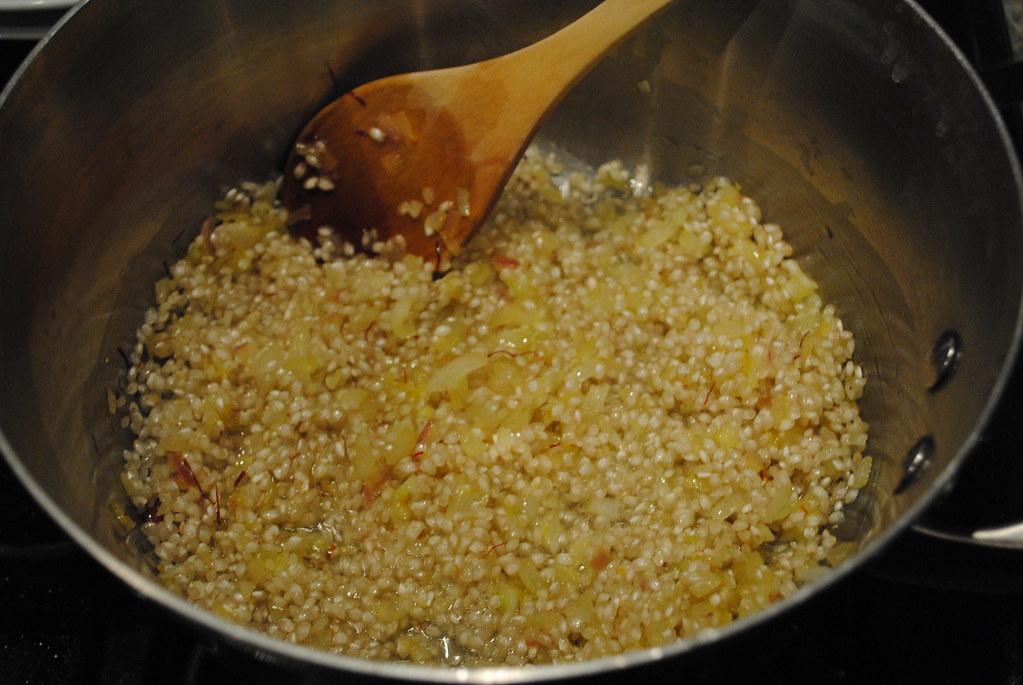
thomas-keller-chicken-paella (6)

Saffron Rice
  • ¼ cup canola oil
  • ¾ cup finely chopped onion (cut just smaller than a grain of cooked rice)
  •  Kosher salt
  • 1 teaspoon saffron threads
  • 2 cups (about 14 ounces) short-grain rice, preferably Calasparra
  • 2 ¾ to 3 ½ cups chicken stock or vegetable stock
Heat the oil in a large sauté pan over medium heat until hot. Add the onion and season with a sprinkling of salt. Reduce the heat and cook gently for 3 minutes. Add the saffron. Reduce the heat to very low, and cook for another 2 minutes; do not brown the onions and saffron. Add the rice and cook over medium heat, stirring often, to toast the rice for 1 to 2 minutes.
Add 2 ½ cups of the stock, stir once, scraping the sides of the pan if necessary, and cover with a parchment lid (see page 120). Bring the stock to a simmer and simmer, adjusting the heat as necessary, for about 8 minutes, until most of the stock has been absorbed. The rice will still be firm. Gently stir the rice, scraping it up from the bottom, and reduce the heat to very low. Add an additional ¼ cup of stock, cover with the lid, increase the heat, and bring to a simmer. Simmer for about 3 minutes, until the stock is absorbed. Taste the rice and, if necessary, continue cooking, adding up to ¾ cup more stock ¼ cup at a time, as necessary, until the rice is almost tender and the final addition of liquid is almost absorbed. Turn the heat to low to allow the rice to absorb the remaining liquid, stirring occasionally. Season with salt and serve hot.

Thursday, February 4, 2010

Best. Brownies. Ever.

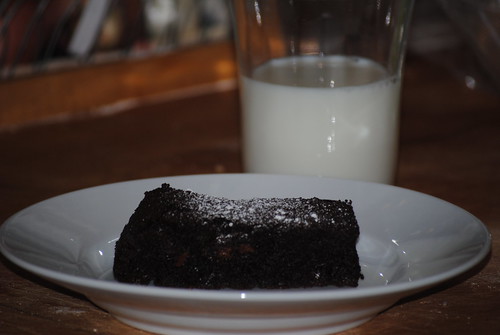
Two words: Thomas Keller. For those familiar with the man who's arguably the greatest chef in America, it should come as no surprise that I've titled this post as I have. For those unfamiliar with him, consider these brownies a tasty introduction. Rich, fudgy, and simply divine, I'll never make another brownie recipe again. 

brownies (1)

This recipe appears in Chef Keller's latest cookbook: Ad Hoc at Home. I was fortunate enough to meet the chef at a book signing in November; he's friendly and encouraging to cooks of all skill levels. If you're intimidated by The French Laundry, check out this book. This recipe alone is worth it.

A couple of notes on the recipe: I used a glass pan and I dusted it with cocoa instead of flour to avoid any white on the outside of my brownies. (And really, why not add more cocoa?) I also had to bake them quite a bit longer than 45 minutes so have your cake tester ready. Finally, alkalized cocoa may sound unusual, but I was happy to find that the cocoa I had in my pantry from Penzey's was alkalized. So check your label. Finally, I didn't have 61% to 64% chocolate on hand so I use 3 ounces 67% and 3 ounces semi-sweet.

Now quit reading and make these brownies. (Get a glass of cold milk ready, too.)

brownies (2)

Brownies
from Ad Hoc at Home by Thomas Keller

3/4 cup all-purpose flour
1 cup alkalized cocoa powder
1 tsp. Kosher salt
3/4 pound unsalted butter, cut into 1 Tbsp pieces
3 large eggs
1 3/4 cups sugar
1/2 tsp. vanilla paste or extract
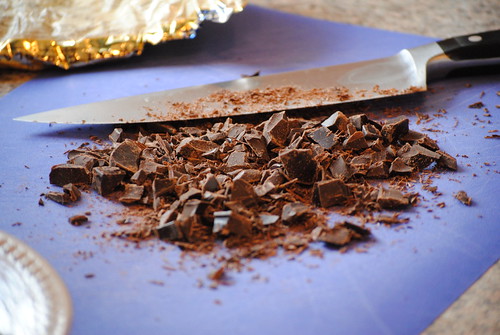
6 ounces 61% to 64% chocolate, chopped into chip-sized pieces
Powdered sugar for dusting

Preheat oven to 350F. Butter and flour a 9-inch baking pan (Chef Keller recommends silicone, but glass or metal will work fine.) Set aside.

Sift together flour, cocoa powder and salt; set aside.

Melt half the butter in a small saucepan over medium heat, stirring occasionally. Put the remaining butter in a medium bowl. Pour the melted butter over the bowl of butter and stir to melt the butter. The butter should look creamy, with small bits of unmelted butter, and be at room temperature.

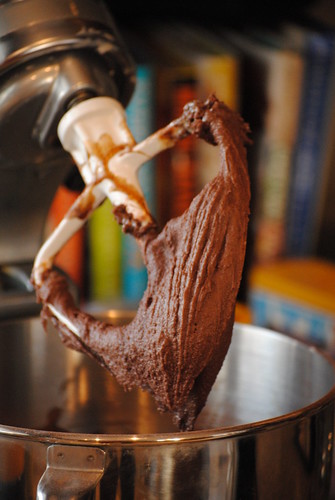
In the bowl of a stand mixer fitted with the paddle, mix together the eggs and sugar on medium speed for about 3 minutes, or until thick and very pale. Mix in the vanilla. On low speed, add about 1/3 of the dry ingredients, then 1/3 of the butter, and continue alternating the remaining flour and butter. Add the chocolate and mix to combine. (The batter can be refrigerated for up to 1 week.)

Spread the batter evenly in the pan. Bake for 40-45 minutes, until a cake tester or wooden skewer poked into the center comes out with just a few moist crumbs. If the pick comes out wet, test a second time, because you may have hit a chocolate chip: then bake for a few minutes longer if necessary. Cool in the pan until the brownies are just a bit warmer than room temperature.

Run a knife around the edges if not using a silicone mold and invert onto a cutting board. Cut into 12 rectangles. Dust the top with powdered sugar just before serving.

brownies
Related Posts with Thumbnails